Lisa Bernstein
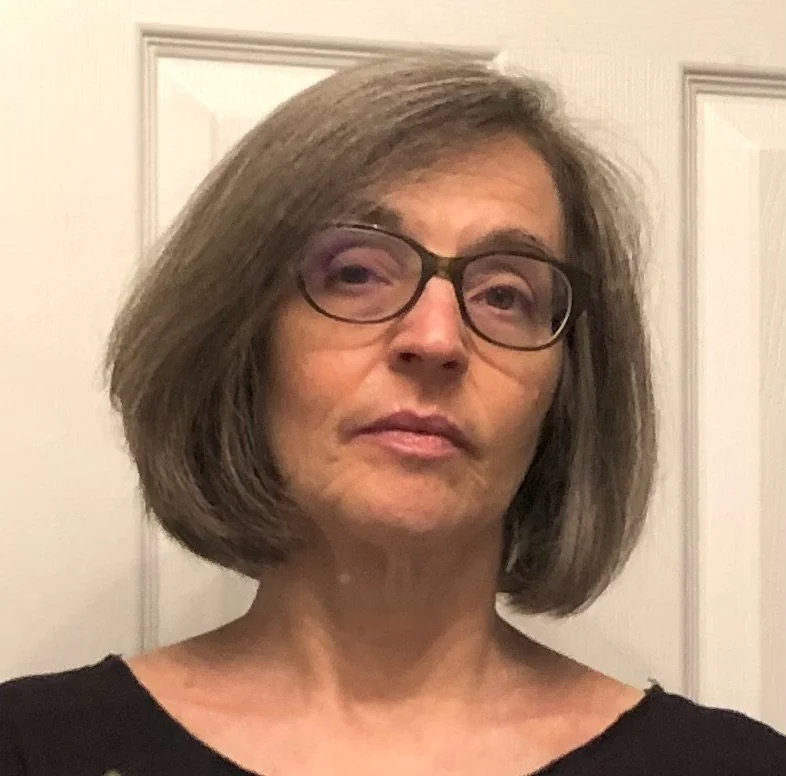
Lisa Bernstein writes essays and creative non-fiction. She lives in Washington, DC, and is a member of the DC Public Library's "DC Writes!" workshop. Her creative nonfiction has been published in Roi Fainéant Press and The Hemlock Journal. Lisa holds a Ph.D. in comparative literature and has published essays on Carmen Boullosa, Maryse Conde, Nadine Gordimer, and Christa Wolf. She is co-editor, with Chu-chueh Cheng, of Revealing/Reveiling Shanghai: Cultural Representations from the 20th and 21st Centuries, SUNY Press; and editor of (M)Othering the Nation: Constructing and Resisting National Allegories through the Maternal Body, Cambridge Scholars Press. She is currently working on a memoir in vignettes, provisionally titled, But, That’s Another Story.
Wellesley Women
Toward the end of the 2016 U.S. presidential campaign, Trump advisor Steve Bannon was criticized for calling Hillary Clinton’s supporters a “bunch of dykes that came from the Seven Sisters schools up in New England.” He meant to offend Clinton and our shared alma mater. Having heard Wellesley referred to as a “hotbed of lesbianism” throughout my college years under the Reagan backlash, I took it as a compliment.
I didn’t know anything about Wellesley College when I arrived for Orientation Week in August 1982, except that it was far enough away from Rockville, Maryland, and Uncle Roger thought it would be the right school for my personality. We hadn’t yet reached that time in our lives of mutual suspicion for me to interpret his meaning as an insult. Back then, I listened to my uncle, because no one else gave me any advice. My parents assumed I would figure it out for myself, as I had figured everything else out by myself, for better or for worse, even as a small child. They were each too busy with their own lives, anyway. I knew by then that Uncle Roger was selfish and elitist, but he hadn’t yet become the reactionary Pfizer executive – Uncle Viagra and Trump supporter – I later knew him to be.
I felt alien to my family, extroverts who always sought the spotlight and made themselves the center of attention, and I never fit in with the depressingly conventional Washington, D.C. suburb where I grew up. I went to Germany my junior year of high school to escape both, and had looked forward to leaving for college since I was eleven. So, after driving up to Boston in my grandmother’s white whale of a Cadillac with Mom and Uncle Roger and immediately kissing them goodbye, unpacking my meager clothes and abundant books, I was horrified to come face-to-face with an entire hall of Rockville High School clones. My new roommate, Jamie Sue Beck from Long Island, had already arranged her eponymous beer bottle collection on one set of shelves, and identically blonde and boppy freshmen flitted in and out of the dorm rooms, along the hallways of fourth floor McAfee. Had I worked so hard to avoid adolescence, only to have it ambush me in this fairytale world I had expected to be filled with cultured, intellectual women?
The rest of that week unfolded the way most of my life had until then. I tried to make friends by fitting in, joining the boisterous crowds on the bus that went into Boston, and even going to a ‘60s-themed frat party at MIT. But I couldn’t take the slovenly drunk boys. I had always felt more comfortable around women. Not the silly girls my age; not the boorish boys; certainly not the leering, predatory men. I had no way to relate to any of these. So, I retreated to my old standbys of reading and drawing, and resigned myself to what I imagined would be four more years of solitude surrounded by chaos.
The next week, however, the upper-class students arrived to save me. The first real Wellesley Woman I met was Susan R. I grasped at her like someone drowning in a sea of vapid, vulgar algae. Susan was slight and elfish, bubbly but sarcastic. She had round, frameless glasses and bright red hair like my first best friend, Carol. All my life, I have had special friendships with red-haired women.
Susan was a senior. She was taking classes in Kant and Kierkegaard, and studying music appreciation for the fun of it. Like me, she wrote stories and made watercolor paintings. But the best part was that Susan had just come back from a semester in Germany. My Germany. The Germany I had fled to at sixteen to get away from the turmoil of my sister overdosing on Tylenol and my brother joining a cult, while my mother was too busy attending community college, socializing with the theater department, and criticizing my absentee father. The Germany I had discovered as no other American Jew from Rockville, Maryland had ever dreamed of doing, and then had longed for ever since I had to return home, alienated, to face a miserable senior year of high school. I loved Germany. From having never learned a word to becoming fluent during my year living with a family in Bad Honnef, I loved speaking German. Susan spoke German with me, as if it were the most natural thing in the world for two American strangers in Massachusetts to converse in a recently learned foreign language. Susan embraced me as a fellow outsider, and she welcomed me into her group of friends, who were weird and interesting in the way my mother’s friends had been, and thus comfortingly familiar.
Wellesley was considered academically rigorous, but it suffered many unflattering stereotypes, such as being snobbish and conservative. Nineteen-eighty-two Wellesley was not quite the 1953 version presented in Mona Lisa Smile, but its debutante air and insistence on tradition were not so far from that world. “Coming out” still meant elegant balls. The Quad and Tower Court looked like Disney castles. I lived in McAfee, one of the East Side Halls, far from Disney World but next to Bates, named after Katherine Lee Bates, a Wellesley alumna famous for writing “America the Beautiful.” I later learned that fourth-floor McAfee was, that year, indeed a hotbed of lesbians.
The first night I spent at the real Wellesley, Susan invited me to go with her and her friends into Cambridge to see a movie. I was hoping for something deeper and more thoughtful than the recently released An Officer and a Gentleman or E.T. Not a Love Story: A Film About Pornography exceeded my expectations. This hard-core anti-pornography documentary was brutal, sexually explicit, and controversial. Afterwards, we argued in a collegial, mutually respectful way about its effectiveness as a critique of patriarchy versus being yet another form of women’s exploitation.
It wasn’t until we were on the bus riding back to campus that I felt the tension among these women who had seemed so emotionally but also physically close, laying their heads on each other’s laps and massaging each other’s necks and shoulders. It was 1982: Ronald Reagan was president, the backlash against Women’s Liberation was beginning, even as lesbians and women of color were challenging Second Wave Feminism’s white, middle-class, heterosexual movement. Everyone was paired off two-by-two on the worn seats, and I found myself sitting next to a small, slight girl with very short, dirty-blond hair. Alyssa W was a sophomore, the only other Jew, and after me the youngest, among the juniors and seniors in the group. She was the only silent one on the bus and she seemed sad. Quiet myself and always drawn to the vulnerable, I basked in Alyssa’s sad silence and tried to emanate feelings of solidarity in our eye of calm among the laughing, boisterous women who were so unselfconscious and demonstrative with their affection.
At the time, I did not understand what was really going on. I found out later that my new friend and heroine Susan had been in a relationship with Dorothy, the Wellesley Freshman Adviser for our dorm who lived on the floor below Susan and me, who was also on the bus that night. In my eternal search for a mentor, I had already sought out Dorothy and asked her which classes I should take. She had recommended Doris Egis’ “American Women Writers of the Short Story,” which was to become my favorite class of the semester; the fourteen-year-old narrator of Grace Paley’s “A Woman Young and Old” embodied my childhood and my adolescent Angst far beyond any Salinger character or Springsteen song.
Apparently, Dorothy had been upset that Susan left to spend second semester of her junior year in Germany, and had started sleeping with Alyssa. Now Susan was back, and the three of them were upset with each other. Dorothy felt abandoned by Susan; Susan felt betrayed by Dorothy. Alyssa was upset because Susan was angry and hurt, because Dorothy was perhaps going to go back with Susan, and because her mother had cancer and would die that winter. As if this were not enough, it seems that Dorothy, wanting to avoid dealing with the three-way mess, had seduced Alyssa’s straight roommate, and she and Sally were only somewhat surreptitiously continuing the affair. The whole situation made me sad because Dorothy and Susan were both my favorite people, the only Wellesley women who were open and friendly to me from the first time I met them, despite my being an awkward, unknown, unknowing little freshman.
Meanwhile, all of these women were trying to decide whether or not I, too, was a lesbian. Most were not out to their families, and those who had come out were rejected, even threatened, by their parents. My nails were long, but I wore lavender nail polish. I had greeted one of the (unbeknownst to me) prominent sophomore lesbians who had a Don Juan reputation and a complete disregard for campus noise level regulations by bouncing into her room and, recognizing the first track of Chris Williamson’s debut radical feminist album, The Changer and the Changed, announcing, “My mother has this record – I love this song!”
All this I only learned later, though. On the bus that night, I knew just that Alyssa seemed melancholy and alone, amid the excited conversations about whether the movie had sensationalized pornography in a way that reproduced the exploitation of women instead of critiquing it, as it had obviously meant to do. Carried away by the intellectual passion and emotional energy, I felt only electrified joy at being allowed into the world of these fascinating women. After years of not fitting in with suburban classmates, high school culture, and a city memorialized by the band R.E.M. as a place not to go back to, I had suddenly, miraculously, found my tribe. I was searching for acceptance, affection, family. I was seeking to be their daughter, but I misinterpreted and was misinterpreted. Eventually, I came to realize that everyone at Wellesley was either looking for a husband at Harvard or MIT, or else pairing off with each other; the only way to belong was to be in a romantic relationship.
When we arrived back on campus, someone suggested a swim in Lake Waban. I ran with the group across the fields, over to the lake in the dark, and when everyone started taking off their clothes, I followed without hesitation, stripping and leaping boldly into the cold, black water. During my first month as a high school exchange student, I stayed with two medical students in Kiel while taking an intensive German language course. Anja and Bettina had no shame about nudity, and they practiced FKK – Freikörperkultur (literally, “free body culture”), changing into their bathing suits on the beach and answering the front door without a shred of clothes. Living with them helped me shed my pathological modesty, despite continuing to hate my body. That month on the Baltic Sea had taken me from the most extreme anxiety to near-unselfconsciousness, so that now I was able to plunge gleefully into the water and splash around nymph-like with half a dozen naked strangers.
Immersed in the pleasure of inclusion and our shared illicit excursion, I hardly noticed when Susan and Esther, the two oldest and emphatic among us, emerged from the lake and, dripping, struggled quickly into their clothes to walk over to a man who was standing nearby, half-hidden behind some trees. I could see them angrily gesticulating, and after sneaking a last look, he left. Galvanized by the man’s audacity and the women’s righteous victory, the rest of us stumbled out of the water and pulled on our clothes, laughing and talking exuberantly over one another as we raced back to the dorm.
Bedraggled and shivering, everyone stuffed into Susan’s tiny single room, draping arms and legs over one another while finding seats on the bed, the chair, and mostly on the floor. Susan brought out a bottle of Bailey’s Irish Cream – contraband at a school in a dry town in a state with a drinking age of twenty, but no one ever got in trouble for underage drinking, let alone underage possession of alcohol, at Wellesley in those days – and we drank from every kind of glass, mug, and paper cup we could scrounge up, and even then we had to share. The stories began and quickly got loud and fast, giddy with the night’s skinny dipping adventure and sips of Baileys. The stories were obscure to me; I didn’t yet know any of the people they were talking about, had no shared point of reference. It didn’t matter. I felt accepted into this inner circle of upper-class women who to me were the most beautiful, the smartest, the funniest people who could possibly exist on the earth.
Set off from the town and roads on wooded hills, Wellesley was like a tiny oasis of a past era with castle-like dorms whose names – the Quad, Tower Court – matched their majestic buildings. Galen Stone Tower presided over the academic square, rising up in the middle of Camelot grounds. McAfee was one of the ugly “new dorms” built in the 1960s on the edge of campus, but to first-semester college me, fourth-floor McAfee was the most idyllic place in the whole world. I had no inkling that after winter break, things would irretrievably change.