Kris Byrd
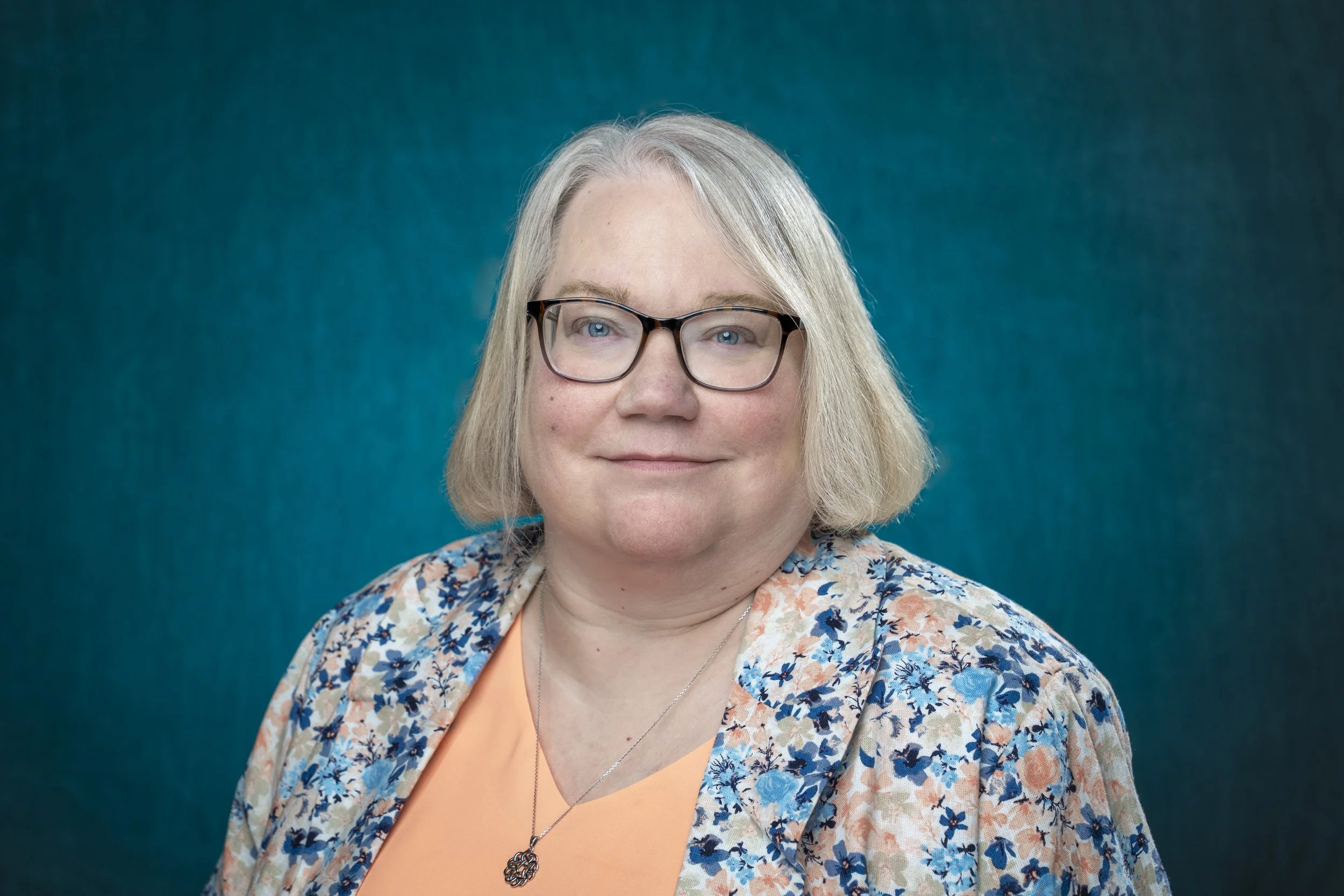
Kris Byrd is a higher ed professional living in Wilmington, NC with her husband Doug and Jake, her Cavalier King Charles Spaniel. Jake happens to be from Ireland. Kris travels every chance she can and never turns down an opportunity to visit a new location, striving to be a traveler, not a tourist, whenever possible. She believes in platonic soulmates and adores intellectually curious friends.
With many thanks
I wasn’t a typical college kid. I never drank with my peers. I spent most afternoons sitting on a floral-upholstered couch in the smoke-filled corner office of a tenured Professor of British and Irish History named Connie. Eventually, I spent several weekend nights a month at her home discussing history, current events, feminist theory, travel, politics, and religion. And we drank. Scotch or Irish whiskey, mostly.
This was where our relationship ended up, but it’s far from where it began. I remember stepping into her office about six weeks into my first semester of college. I hadn’t realized she was the department chair, and when I saw the secretary sitting guard outside her door, I almost fled the scene. It was her office hours, so her door was wide open, and she spotted me. I went to a small, private liberal arts college, so she likely recognized me from our class of about 18 students.
She was on the phone, yelling at her brother about something to do with her niece’s upcoming wedding, when she motioned me to come in and sit down. Only there was no place to sit. Books and papers covered every surface, including the chairs. I was frozen, not wanting to move things that didn’t belong to me, while she yelled even louder before slamming down the receiver.
By the time she slammed down that receiver, I was pretty overwhelmed. Enough so that I had no idea why I was there. There was an upcoming test. There were things I wanted to clarify. By the time she’d cursed at her brother, thrown some books on the floor to make a place for me to sit, dropped a lit cigarette onto some papers on her desk, and closed the door to the outer office, I was stammering. This was a new feeling. I was a smart kid, and I was at this private university on a full academic scholarship. I had never in my life had a problem talking to a teacher. So, why did this woman terrify me? I’m pretty sure I left her office that day without having actually asked a question.
I’ve never understood how someone could take a test and not have a pretty good idea how they performed on it. I’ve never not known, within a couple of points, how I scored after taking an exam. So, when Connie handed me that test back upside down and asked me to come to her office that afternoon, I had a brief mental crisis until I flipped it over – 100 – so I had known what I had known after all and aced my first Western Civ exam. OK.
So, what did this terrifying woman want? I had hoped going in the second time would be a calmer experience. I’d talked to my mom about the first encounter. “You just caught her at a bad time,” she’d said. Nope, she was smoking a cigarette with her feet on her desk while cursing at the university president and threatening to organize a campus protest if he dared to try to bring back the football team. In fact, she did just that a year later, and I made most of the signs for all the history and political science faculty. After she’d yelled at the president for a bit, she ended her call and asked me, “Why are you here?”
“Because you asked me to come in,” I replied.
She gestured all around the room and asked again, “Why are you here?” and I understood she was asking a larger question about why I was at the university.
I didn’t have a good answer. Now, it reminds me of a scene from The West Wing where the press secretary is delighted because the president’s opponent was asked on camera why he wanted to be president, and he gave an absolutely pathetic answer. I felt like I had no answer to Connie’s question. I offered things like, “It was the next step,” and “I was offered a scholarship.” None of these were the answer she wanted. Honestly, I was 17 years old, and going to college had just always been expected.
So, Connie changed tactics. “What are you studying?” and “What do you want to do after college?” were her next attempts. I told her I was a political science major and that I planned to go to law school after graduation. She seemed disappointed by both answers, but I wasn’t sure why. We talked a few more times that semester, and when it was time to register for the next semester, she asked me to register for her British History class. I told her I couldn’t because it was an upper-level class and I was only a first-semester freshman. Truth be told, I wasn’t even interested in the class. She told me that if I wanted to take the class, she’d let me take it.
I wasn’t afraid of college despite the constant foreboding warnings from high school teachers and counselors that it would be difficult. I didn’t expect it would be any more challenging than any other school I’d attended, and I was mostly right. What I eventually realized, maybe a bit too late, was that it could be as easy or as challenging as I allowed it to be. When I graduated, Connie gave me a gift with a card that said, “Congratulations on your graduation. All those hours of studying really paid off.” On the inside, it said, “Both of them!” This honestly wasn’t far from the truth, but the work I’d done had won student research awards, designated me as an honors program graduate, led to an academic publication at 19 years old, and left me with a record good enough to get into law school and grad school. It had been enough.
Class registration was quite the production before everything was computerized. At my university, the professors all sat at tables in what was an old ballroom at the once-grand hotel that had originally occupied the building. I once attended a casino night in that ballroom where all the dealers and table operators were professors, and you could almost picture the former opulence of that space. At registration, there were 8-foot tables arranged by department. Professors stood there with 3x5 index cards, each with a label indicating the course name and number, room number, and the day and time the class met. Students were let into the ballroom in a staggered time frame based on hours earned. We had to find the professors whose classes we wanted to take and ask them for a card. If they were out of cards, we didn’t get a seat in the class. Students had to be strategic and try to get the cards they wanted most first. Once you were holding 4-5 cards, you had your schedule. When I got to the history department’s tables, Connie pulled the last card for British History out of her purse where she’d been saving it for me.
What I saw the next semester was someone who came alive when she taught British history, and I was beginning to understand that I didn’t have a passion yet. It definitely wasn’t British history. It wasn’t political science either. I discovered it one semester later when I took Connie’s US Women’s History class, falling in love with Lucy Stone, Alice Paul, and the organizers of the Seneca Falls Convention. I read everything Gerda Lerner, Jane DeHart, and Nancy Hewitt wrote. Nancy later became my graduate advisor when I walked out of law school orientation to attend grad school in history instead. Connie had insisted on the grad school application as a “Plan B.”
I taught history for a while, and I ultimately sought a more interdisciplinary approach through cultural studies. I never fell out of love with history, but at some point I fell out of love with teaching for poverty wages. When I finally left the classroom, I was able to afford to travel for the first time, and my first trip out of the country was straight to Connie’s beloved Ireland.
Connie passed away a few years ago in a rather spectacular fashion. She blew herself up and leveled her small home in South Tampa while smoking a cigarette next to her oxygen tank. I just know there was a glass of Jameson or scotch next to her chair when she died. If not for over 40 years of chain smoking, she never would have needed the damn oxygen tank.
Connie was brash. She never missed an opportunity to speak up, and she never cared who she offended. I had been notoriously quiet up until this point in my life, and I certainly had no plans to change that. At some point, I started speaking up for myself, my students, and my own children, but sometimes I still slip. In her 40s when I met her, Connie had never been married and had no interest in being anything more than an aunt to several nieces and a nephew. She let female students live in her home every summer when the dorms were closed while she traveled, most often to Dublin for research. She dated a couple of different men, occasionally at the same time, and she spoke freely about her sex life. Mostly, she made it clear that she would never share her home or her life with a man for fear of losing her freedom and herself. I feel like I found a balance she never could have imagined in my own life, where being a wife and mother doesn’t equate to a loss of self. To that, Connie would have talked about the realities of second and third wave feminism and then simply said, “You’re welcome.”
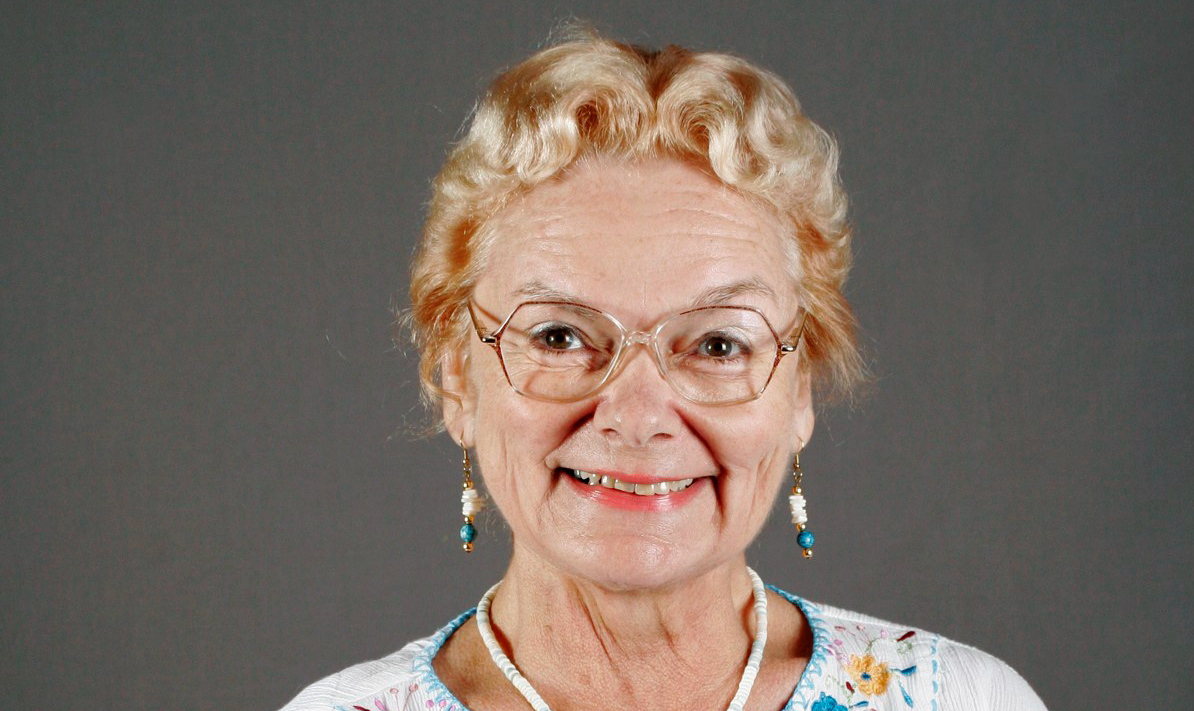
Connie Rynder, as pictured in the University of Tampa’s student newspaper, The Minaret