Jemma Stewart
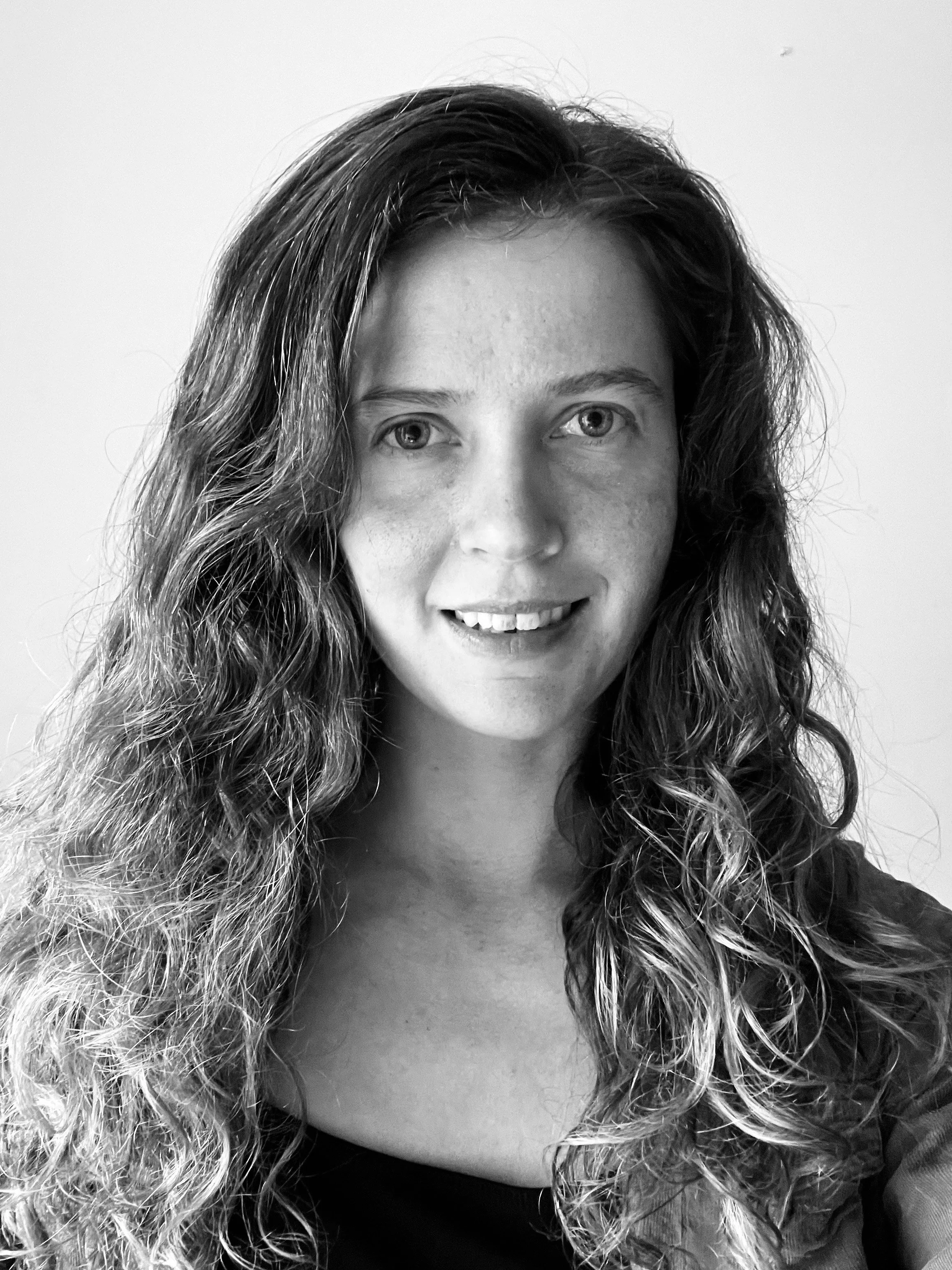
Jemma Stewart is a queer feminist writer based primarily in Bristol, England. She holds a MA in Creative Writing from Bath Spa University and her writing has been published in Bandit Fiction, The New Feminist Magazine and Cultural Me, as well as being longlisted for the Mslexia Novel Prize. Her second novel, a British feminist road story, is currently out on submission. She has worked in domestic abuse and women’s housing services for several years and can always be depended on to rant about women's rights.
The Walk Home
I’ve had a couple of drinks. A couple too many, maybe? I sway along the pavement. Really, I should get a taxi, but payday’s on Monday and my last tenner went on the last round of drinks with Laura. The first time we’d seen each other for months. She told me about her new job, her old boyfriend, and we raised our glasses to out-with-the-old-in-with-the-new philosophy. A good night. A late night. I could get a bus, but it’s only twenty minutes down the road. What can happen in twenty minutes? I’ll be fine. I’m almost always fine.
The eternal question, though — to headphone or not to headphone? I want music to wash through my brain, fill me up, block out this dark street. I want Nina Simone’s husky vocals making me feel good. It’s easier to ignore the leering looks that way, to stay within my personal bubble. But no, it’s too dangerous. I need to stay alert. Need to listen to the footsteps behind me, analyse each beat, figure out whether they’re coming closer, whether they belong to a man or a woman, whether they’re hurrying or keeping in step with me, whether they might be the last thing I ever hear.
My keys are cold against my fingers, jangling as I try to arrange them into the optimum stabbing position. Not that anyone would be scared by a drunk girl wielding a 3cm piece of not-that-sharp metal. Still, it’s what they say to do. They also say not to walk home alone at night. Not to walk home alone drunk at night. But what choice do I have? Am I meant to live like a nun because men are arseholes? Or like Cinderella, dashing off in a pumpkin at the stroke of midnight?
Anyway, women going missing off the street is rare. I run through the statistics in my head: 90% of rapists are known to their victims. So if I’m going to be raped, it probably won’t be on my way home tonight. And around half of female murder victims know their killers, so if anyone’s going to kill me, it’s fifty-fifty whether it’ll be out here on the streets or at home. So actually, it’s pretty safe out here. What am I even worrying about?
Except I’m on my way home. Home, to where I live with four other people, half of them men. People who are known to me and therefore more likely to rape me than the strangers on the street, or equally likely to murder me. Maybe I should get a lock on my bedroom door? But come on, they’re not murderers or rapists. Not that I know them that well — they’re all friends of a friend who helped me find a place after Pete and I broke up. Pete. How many women are killed by their ex-partners every year? Not that he ever hurt me. Not physically, at least. Except that one time we tried BDSM and he choked me for so long I had a panic attack. It’s very hard to say your safe word when someone’s hands are closing off your windpipe. But that was an accident, wasn’t it? He’d never deliberately hurt me…I don’t think.
Fuck. A man is walking towards me. My heart jitters. He’s all in black and he’s walking with purpose. It’s fine, though. Men walk with non-homicidal purpose all the time. It’s fine. Definitely, totally fine. But my heart doesn’t believe me. Neither does my body. Every muscle is tense. He’s getting closer. I stare at the ground, desperate to avoid eye contact. He’s only a couple of metres away now. I hold my breath. I have no idea why. We pass each other without incident and the breath rushes out of my body. Panic over.
I’d normally turn left here, taking the fastest route home, down the little alleyway. But my feet dither. The main road’s slower, but at least it’s well lit. A drunk voice in my head wants me to go the shorter way. Don’t be a frightened, little girl, it says. DON’T LET THEM WIN. Whoever they are. But I sigh, staying on the main road, taking the advice of parents, teachers, friends, colleagues, newspaper articles, social media, government posters, and anyone else who’s ever told me how to avoid getting raped and murdered.
The chill night air makes my skin prickle. I guess I haven’t entirely listened to all the advice on how to remain unraped. The dress I’m wearing would’ve been shockingly risqué in the Victorian era. It falls just above my knees and we all know what an erotic part of the body the knee is. The sleeves consist of a few centimetres of fabric that barely cover my shoulders. At least I’m flat-chested, so no one will ogle my non-existent cleavage, but I’m not wearing a bra and my nipples are standing to attention. What if that tempts a passing male? What if my nipples are asking for it?
All this worrying is sobering me. It’s also exhausting. My legs are heavy as rocks. Stonehenge-sized rocks. My shoulders ache from hunching towards my ears. I’m halfway home, but I want to lie down and take a nap. Of course, that would break all the rules. But as I’m contemplating a brief sit down, a car pulls up beside me and my soul leaps out of my body.
There’s a man in the passenger seat. It’s a boy racer car. All black and shiny, lights around the wheels, obnoxiously loud engine. That means the driver’s male, too. Probably. I’m outnumbered. This is it. This is how I die. The car stops a little way ahead of me. No one gets out. Adrenaline pumps through my body. Fight or flight. But there’s two of them and they have a car. I can’t fight or fly. I could cross the road, but that shows weakness, fear. And they could still follow me.
I have to keep walking. I’m almost alongside the car. Walking on the far side of the pavement, my shoulder skims the wall to my left. My body is tense. Waiting for the door to open, for him to grab me and force me into the car and…maybe I should call my mum? Tell her I love her. Or call anyone? Maybe if I have a phone in my hand, they’ll leave me alone? I pull it from my pocket, ring the last number on my call list.
You’re through to Lavender Way Medical Centre.
Oh. My doctor. But I talk anyway. Loudly. Casually.
“Hey! Yeah, I’m just on my way home… Hahahaha. Yeah, okay, great. I’ll be there in five minutes. How are you?”
Adjacent with the car now. I march as fast as I can without running. The doctor’s pre-recorded voice message tells me numbers to call in a crisis. But there’s no number for my crisis. The woman-walking-alone-at-night crisis. The probably-about-to-be-kidnapped crisis. I guess the number’s 999, but the police are grabbing women off the street and murdering them these days. We can’t trust anyone.
I get past the car. No one’s got out of it. I’m still alive and free. I’m such a dick. Of course, he was just parking; it’s a parking space. I must remember not every man in the world is out to kill me. Some are merely going about their business, not thinking about the lone woman on the pavement or how terrified she’d be by a car pulling up right next to her this late at night.
I need to relax. Less than ten minutes from home now. I walk this route all the time and I continue to live and breathe. Maybe the world isn’t as full of scary murderers and rapists as we’re led to believe? Maybe it’s another way for the patriarchy to keep us down and hold us back — making the threat of male violence loom larger than the reality? Using the fear to limit us, restrict our freedom, make us feel vulnerable? Except names start popping into my head — names of so many women and girls who’ve gone missing.
Holly and Jessica, young girls who disappeared while out playing, that picture of them in their Man U shirts. The fear in my parents’ voices banning me from going out while the police tried to find those girls. The first time I realised how dangerous the world was for me.
Joanna Yeates, who disappeared down the road from my uni halls. Killed by her neighbour. Proof we’re not safe inside our own homes. I remember the nights my flatmate and I spent curled up in each other’s beds, too afraid to sleep alone.
And the women who don’t look like me — the ones who aren’t white and middle-class, so don’t get the same coverage. Blessing Olusegun, drowned on a beach after asking her boyfriend to ‘stay on the phone’. Police insisting her death wasn’t suspicious because a Black woman’s body isn’t worth their time, their efforts.
All the names build and build. The rage vibrates through me. So sick of being angry and afraid. The constant cycle. Anger, fear, anger, fear. Angry at being afraid. Afraid of being angry. It makes me want to run and scream. To keep running, past my house, out of this city, out of this country, out of this world to somewhere women don’t live in constant fear. This world in which I endlessly ping-pong between defiant risk-taking and cowering in the proverbial corner.
But I don’t run. Or scream. I walk. Feet pounding against the pavement. Each step closer to home, to safety. Four minutes away. Not that I’ve counted down the minutes before. Alright, of course I have. This is the final sprint. The last stretch through quiet residential streets, curtains closed, sleeping families all around, probably wearing ear plugs to block out the distant sirens, the mating foxes, the screams for help. My footsteps quicken and—
Two pairs of footsteps. Mine and… I glance back. A man. A few metres behind me. I walk faster, so close to home. His footsteps in time with mine. Not overtaking or dropping back. Heart going a million miles an hour. Palms sticky with sweat. Trying to calm myself, convince myself it’s fine, I’m panicking over nothing again.
I cross the road. So does he. The panic rises. But maybe it’s coincidence? Stop catastrophising. I’m almost at my turning now, then one more road ’til I’m home. He’ll carry on up the main road and prove I’m being paranoid. I cross back over the road, take my turning, hold my breath. His footsteps are still there, following mine. Tears prick my eyes. I fight the urge to run. Because it’s probably fine. It’s almost definitely fine.
I get out my phone. Open my house group chat, send my location and a message: If not home in 3 mins call police. My hands shake. Maybe I should call someone. Don’t think I can speak without crying, though. But I keep my phone in my hand, thumb over the 9. Force my feet to keep going. Going, going, going. As fast as they can.
Get to my street in record time. Brain tells hand to search for keys, but they’re already between my fingers, digging into my skin. He’s still behind me. On my street. I can see my house. I run.
“Hey! Where you off to?” His voice rings in the dark quiet night.
My brain whirrs with jumbled comebacks, but my lips clamp shut. I’m at my door. The key won’t go in the lock. As I fumble, the door swings open. My housemate’s worried face appears. I stumble into her arms. Slam the door behind me. We melt onto the floor. My whole body vibrates with fear. Tears pour down my cheeks.
“What happened?” she asks, stroking my hair. I can feel her heart pounding along with mine.
“Nothing happened,” I tell her. “Nothing happened.”